
The 7 Stages of Dementia Explained — and the Care Each Stage Needs

July 5, 2026 · 9 min read
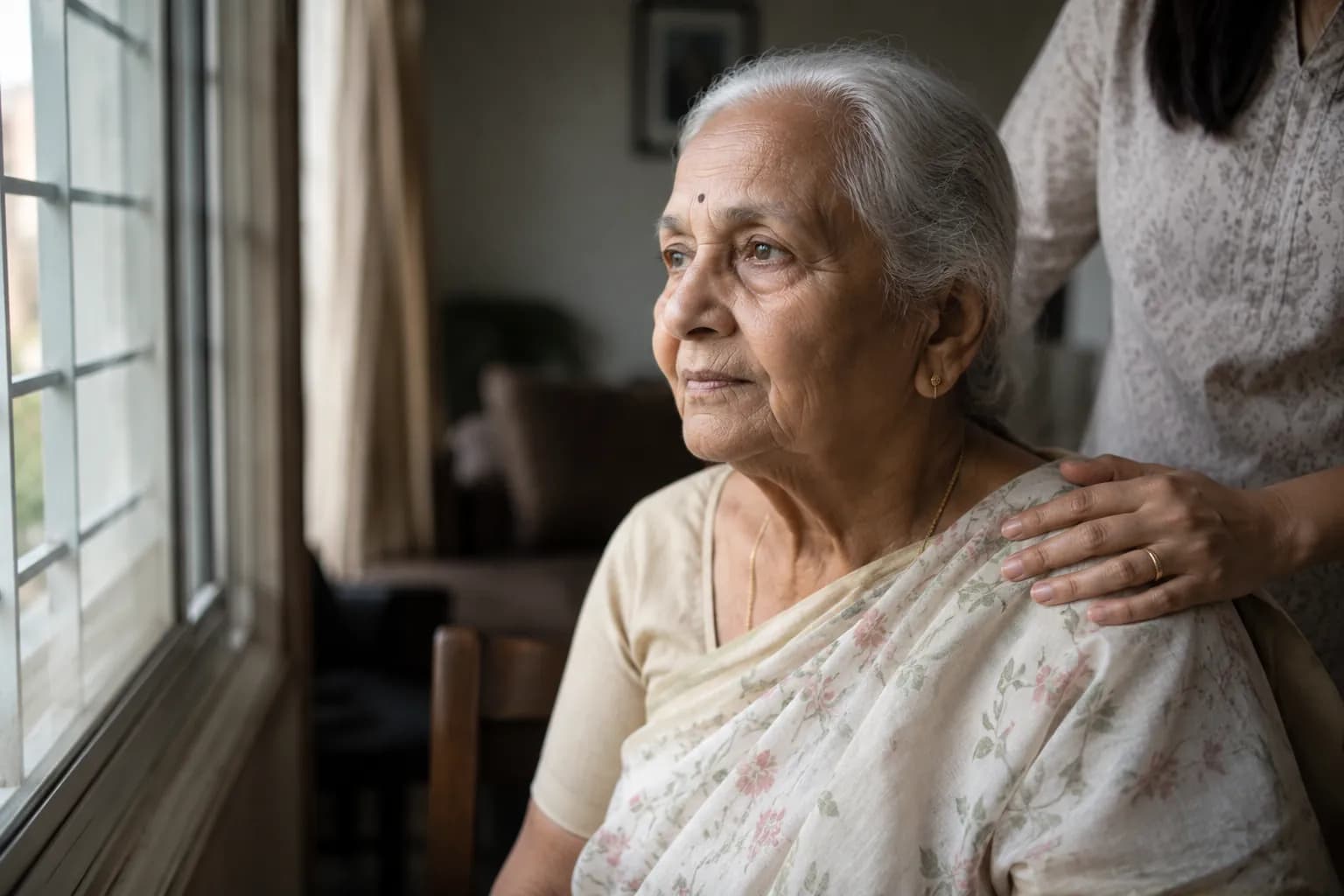
In nearly every conversation that follows a dementia diagnosis, the same question comes up: "What happens next?" It's the not-knowing that frightens families most. And understanding how the condition typically unfolds gives you something genuinely precious — the ability to prepare, to arrange care ahead of need instead of in a panic, and to make the most of the window when your parent can still take part in decisions. So let me walk you through the widely used 7-stage framework, and, just as importantly, the kind of care that helps at each point.
Sources: Reisberg GDS framework; LASI-DAD / Lee et al. (2023); ARDSI Dementia India Report.
Where these 7 stages come from
The most commonly referenced map of dementia progression is the Global Deterioration Scale (GDS), also called the Reisberg scale after the doctor who developed it. It splits the journey into seven stages, from no visible impairment to very severe decline.
Before we begin, one caveat I want every family to hold onto: dementia does not follow a neat timetable. People move through the stages at very different speeds, symptoms overlap, and some abilities are kept long after others are lost. Think of these stages as a map of the terrain, not a train timetable. Different types of dementia progress differently too — our guide on dementia vs Alzheimer's explains why. Use the stages to anticipate needs, never to predict exact dates.
Here's what I tell families: the 7 stages are a guide, not a countdown. They help you prepare for what may come while you stay focused on the person in front of you today.
Stage 1: No cognitive decline
There are no noticeable symptoms here. The person functions normally, with no memory problems evident to them, their family or a doctor. If dementia is present in the brain, it isn't showing yet.
What care looks like: Nothing specific to dementia — this is simply a healthy baseline. The most useful thing families can do is support general brain and heart health: good nutrition, exercise, social connection, and keeping blood pressure and diabetes in check.
Stage 2: Very mild decline
Now the person may notice small lapses — forgetting a familiar name, or where they put everyday objects. These changes are subtle, usually indistinguishable from ordinary age-related forgetfulness, and typically not obvious to others or picked up on a medical exam.
What care looks like: Still minimal. Be gently observant and encourage a healthy lifestyle. I'd honestly say there's rarely cause for worry at this point — most people at Stage 2 don't have dementia at all.
Stage 3: Mild cognitive decline
This is often where families first sense that something is genuinely different. The difficulties become noticeable to those close by:
- Forgetting words or names more often
- Trouble remembering recently read material or newly met people
- Misplacing valuable objects
- Difficulty planning, organising or concentrating
- Getting a little lost in less familiar places
This stage can last a couple of years, and it's frequently when a first medical evaluation happens. I can't stress enough how valuable an early diagnosis is right here.
What care looks like: Support rather than supervision. Help with organisation — shared calendars, written reminders, pill organisers, labelled items. Encourage your parent to keep doing what they love. And crucially, this is the window to involve them in future planning — care preferences, finances, legal matters — while they can still express their wishes clearly.
Stage 4: Moderate decline
By now a doctor can usually detect clear signs of dementia, and the difficulties are more definite:
- Reduced memory of recent events and personal history
- Difficulty managing money, bills and household tasks
- Trouble with complex activities like cooking a full meal or planning an outing
- Withdrawal from socially or mentally demanding situations
- Noticeable mood changes — quieter, more anxious, or defensive
What care looks like: Daily-living support starts to matter. Your parent may still bathe and dress independently but needs help with finances, transport, medication and appointments. Structure and routine become important. In my experience, this is when many families first start weighing extra help at home or professional support.
Stage 5: Moderately severe decline
At this stage people can no longer manage independently and need help with day-to-day activities. The memory gaps widen:
- Difficulty recalling their own address, phone number, or the year
- Confusion about time and place
- Needing help choosing appropriate clothing for the weather or occasion
- Still usually remembering close family and key details of their own life, and generally able to eat and use the toilet without help
What care looks like: Consistent, hands-on assistance through the day. This is where round-the-clock support gets genuinely hard for family alone, especially if caregivers also work or live far away. Safety, supervision and a calm, familiar environment reduce distress. Professional memory care — trained staff, structured days, medical oversight — often starts to make a real difference here.
Stage 6: Severe decline
This stage brings significant changes and a much higher level of dependence:
- Needing help with dressing, bathing and toileting
- Loss of awareness of recent experiences and surroundings
- Difficulty recognising faces, sometimes even close family — though the person may still feel the comfort of a loved one's presence
- Personality and behavioural changes — agitation, suspicion, repetitive behaviour, or sundowning (increased confusion and restlessness in the late afternoon and evening)
- Sleep disturbances and, sometimes, wandering
- Increasing difficulty with continence
What care looks like: Intensive, skilled, 24/7 care. Managing behavioural symptoms safely, preventing wandering, maintaining hygiene and dignity, keeping the person calm — all of it takes training and patience. I'll be honest with you: this is usually the stage at which home care, however devoted, becomes physically and emotionally unsustainable for most families. A secure, dementia-friendly setting with a nurse-led team can protect both the person's safety and the family's wellbeing.
Stage 7: Very severe decline
In the final stage, dementia affects the body as well as the mind. The person gradually loses the ability to respond to their surroundings, to hold a conversation, and eventually to control movement:
- Very limited or no speech, though some may say a few words
- Needing full assistance with eating, and difficulty swallowing
- Loss of the ability to walk, sit up unaided, or hold up the head
- Complete dependence for all personal care
What care looks like: Total, tender care focused on comfort and dignity. Skilled help with feeding and swallowing, careful skin and pressure care, pain and infection management, and — I always emphasise this — emotional presence. Gentle touch, familiar voices and music can still bring comfort. Palliative and end-of-life care principles guide this stage, always with medical guidance.
When home care is no longer enough
There's no single "right" moment to move from home care to professional memory care — it depends on your parent's needs and your family's circumstances. But some signs tell me it may be time to seek more help:
- Safety is getting hard to guarantee — wandering, falls, leaving the gas on, or leaving the house alone
- Care now demands round-the-clock supervision the family can't sustain
- Behavioural symptoms like aggression or severe sundowning are hard to manage safely
- The primary caregiver is exhausted, unwell, or burning out
- Medical needs — medication, mobility, feeding — have grown beyond what's manageable at home
Reaching this point is not a failure. Choosing professional care is stepping in with more support, not giving up. Our guide on when to move a parent to a dementia care home explores this decision with more depth and compassion.
How the right environment helps
As dementia progresses, the environment around your parent matters as much as the medical care. A well-designed memory care setting offers:
- A secure, dementia-friendly layout that reduces the risk of wandering while keeping a sense of freedom
- Structured routines that lower anxiety by making each day predictable
- Trained care teams and 24/7 nurse and doctor support to manage medication, health changes and behavioural symptoms safely
- Physiotherapy and rehabilitation to preserve mobility and independence for as long as possible
- Nutritious, appropriate meals and help with eating as swallowing becomes harder
- Companionship and gentle activity that support dignity and connection at every stage
You can learn more about how a structured programme supports families through our dementia and Alzheimer's care service.
Frequently asked questions
How long does each stage of dementia last?
There's no fixed answer. The pace varies widely between individuals and between types of dementia — some stages last months, others a couple of years. What matters more than exact timing is watching your parent's changing needs and adjusting care accordingly.
Does everyone go through all 7 stages?
Not in a clean, ordered way. Symptoms overlap and progress at different speeds, and other health conditions affect the course. The 7 stages are a helpful framework for the general direction, not a rule every person follows exactly.
What stage is best to consider a memory care home?
Many families begin exploring professional memory care around Stages 5 and 6, when round-the-clock supervision gets hard to provide safely at home. That said, the right time depends on your parent's specific needs and your family's situation, not the stage number alone.
What is sundowning, and which stage does it appear in?
Sundowning is increased confusion, restlessness or agitation in the late afternoon and evening. It's most common in the middle-to-later stages, particularly Stage 6. A calm, well-lit, predictable evening routine can help reduce it.
Can the progression of dementia be slowed?
There's no cure, but early diagnosis, appropriate medication, managing other conditions (like blood pressure and diabetes), staying active and socially engaged, and good structured care can all help preserve function and quality of life for longer. Always discuss treatment options with your parent's doctor.
Is late-stage dementia painful for the person?
They may not be able to express discomfort in words, which is exactly why attentive care is essential. Skilled caregivers watch for signs of pain and manage it proactively, along with skin care, feeding and infection prevention. The focus here is comfort, dignity and gentle human connection.
A gentle next step
Wherever your parent is on this journey, you deserve expert support beside you. At Prarambh Care Homes in Noida and Ahmedabad, serving families across Delhi NCR, our trained teams provide 24/7 doctor- and nurse-led medical support, physiotherapy and rehabilitation, nutritious meals and a secure, dementia-friendly environment — the kind of care that adapts as needs change. Over 350 families already trust us to walk this path with them. To see our home and meet the team, book a visit or call +91 95120 21118.
Medical Reviewer — Emergency & General Medicine, MBBS
MBBS physician with over two decades in emergency, critical and general medicine. Read full profile →
Bring the right care to your family
Get a compassionate, doctor-led care plan from our Noida & Ahmedabad team.