
Parkinson's Disease Stages Explained — and How Care Needs Change

July 9, 2026 · 9 min read
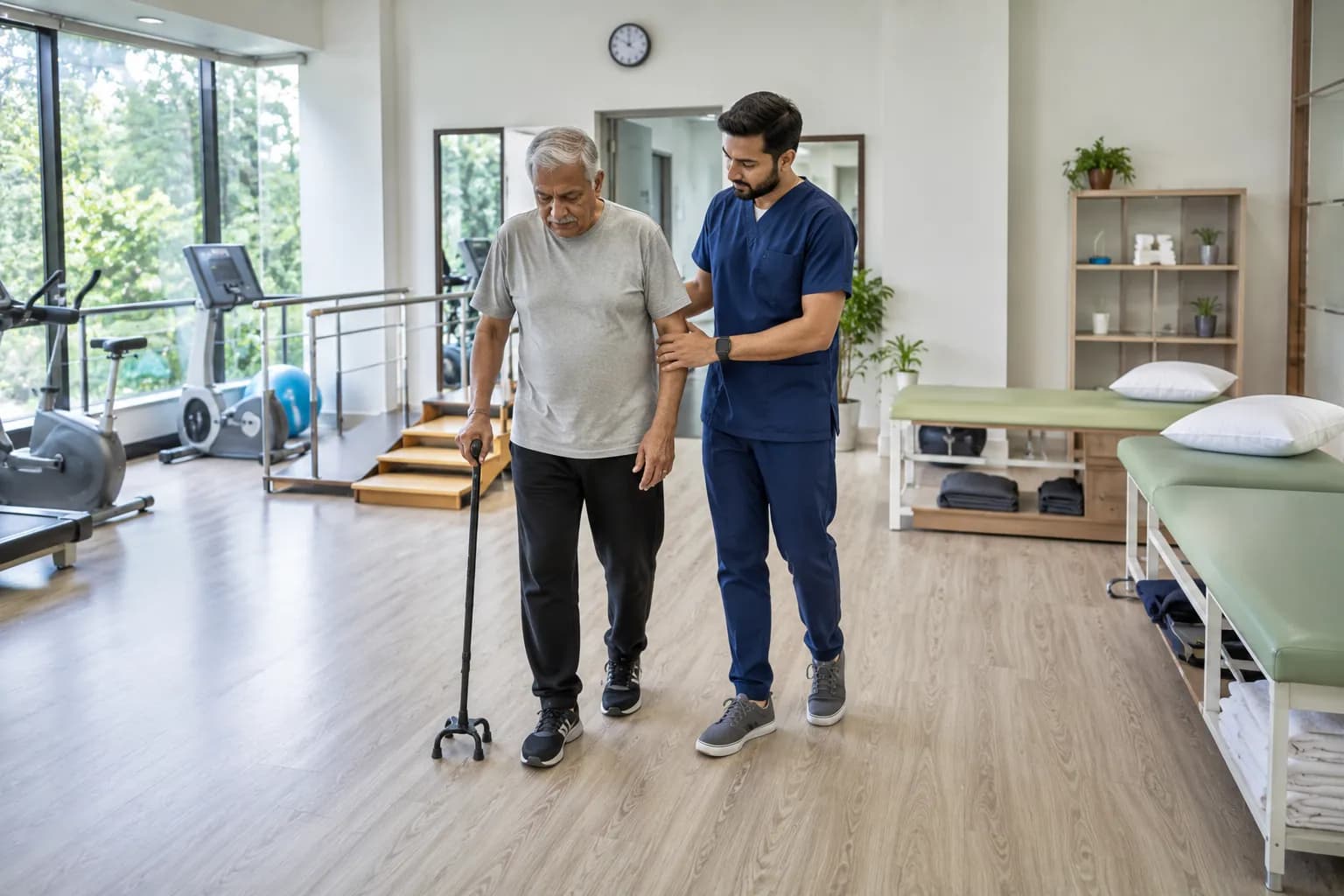
When a family sits across from me soon after a Parkinson's diagnosis, the first question is almost always the same: "What happens next?" I'll be honest with you — nobody can answer that with a calendar. Parkinson's moves at its own pace, and no two people I've cared for have ever walked exactly the same path. But I've learned that understanding the broad stages of the illness settles a lot of fear. It lets you plan ahead calmly, make sense of a new symptom without panicking, and recognise when a little extra support would help.
So let me walk you through the five-stage framework the way I'd explain it across the table — what tends to shift at each point, and how care needs change with it. Treat this as a map, not a timetable, and always talk your loved one's specific situation through with their treating neurologist.
Sources: WHO; Parkinson's Foundation.
How doctors actually stage Parkinson's
Parkinson's is a progressive neurological condition that affects movement first, and over time many other body functions too. It's also the world's fastest-growing neurological condition, with an estimated 10 million people living with it globally, according to the WHO. To describe how far it has advanced, doctors most often reach for the Hoehn and Yahr scale, which divides the illness into five stages based mainly on motor symptoms and balance.
Here are the two things I ask every family to hold onto. First, progression is usually slow — many people live well for years, sometimes decades, after diagnosis. Second, and I feel strongly about this, the stage number describes physical function, not a person's worth, their mood, or their ability to enjoy life. Plenty of people in the middle stages still travel, tend a garden, play with grandchildren, and stay right in the middle of family life with the right support.
Here's what I tell families: the five stages are a guide to changing care needs, not a countdown. Good treatment, steady physiotherapy, and a supportive environment can keep someone independent and comfortable far longer than they fear.
The four movement symptoms to know
Across the stages, four movement symptoms tend to define Parkinson's:
- Tremor — a rhythmic shaking, often starting in one hand at rest.
- Rigidity — stiffness in the limbs, neck, or trunk that can be uncomfortable.
- Bradykinesia — slowness of movement, the symptom that most affects daily life.
- Postural instability — problems with balance, which appear in later stages and raise the risk of falls.
Alongside these sit the non-motor symptoms — constipation, disturbed sleep, low mood, loss of smell, changes in blood pressure — and honestly, these sometimes trouble families more than the tremor itself.
Before we go stage by stage, here's the whole journey at a glance:
Framework: Hoehn & Yahr staging scale.
Stage 1: early and mild
In the first stage, symptoms are usually mild and show up on only one side of the body. You might notice a slight tremor in one hand, handwriting that's shrinking, a stiff arm that no longer swings while walking, or a subtle change in facial expression and posture.
At this stage most people manage everything independently. Work, hobbies, and daily routines usually carry on with little disruption.
What care looks like at Stage 1
- Building a relationship with a good neurologist and starting the right medication.
- Beginning gentle, regular exercise — genuinely one of the most valuable things a person can do this early.
- Learning about the condition so the whole family understands what's ahead.
Professional care is rarely needed here, but I'd call this the golden window for building healthy habits. Structured physiotherapy started early helps hold onto flexibility, balance, and confidence.
Stage 2: symptoms on both sides
In the second stage, symptoms begin to affect both sides of the body. Tremor, rigidity, and slowness become more noticeable. Everyday tasks — buttoning a shirt, cooking, walking longer distances — start taking more time and effort. Posture may stoop slightly, and speech can grow softer.
The key point is that balance is usually still preserved here, so the person can generally live independently, even if their daily routine takes longer than it used to.
What care looks like at Stage 2
- Reviewing medication timing with the neurologist as symptoms broaden.
- Building physiotherapy into a regular routine to hold onto strength and mobility.
- Allowing more time for daily tasks and easing the pressure to rush.
- Watching for non-motor symptoms like constipation, sleep trouble, or low mood, and flagging them to the doctor.
This is often when I see families start sharing responsibilities — one person handling appointments, another helping with errands. Seniors living alone sometimes begin weighing up a more supportive living arrangement, simply for peace of mind.
Stage 3: the middle stage, and the balance shift
Stage 3 is the one I'd call a turning point. The defining new feature is loss of balance — your loved one may be slower to catch themselves after a stumble, and falls become a real risk. Movements are noticeably slower, and reflexes lag.
Someone at this stage is usually still independent for a lot of things, but dressing and eating get harder. This is very often when families first reach out to me for more structured help, because the fear of a fall — especially when the person is alone — turns into a daily worry that never quite switches off.
What care looks like at Stage 3
- Fall prevention becomes the priority. Removing loose rugs, adding grab bars, improving lighting, and keeping walkways clear all matter.
- Physiotherapy aimed specifically at balance, gait, and safe movement.
- Supervision during risky moments like bathing or using stairs.
- Occupational support to keep daily tasks manageable and dignified.
For families where everyone works, or for NRI children caring from abroad, this is frequently the point where a specialist care setting starts to make real sense. A fall-safe environment with trained staff and on-site physiotherapy can dramatically cut the risk of a fracture that sets someone back months. For the day-to-day side of home support, my colleagues' guide on caring for a Parkinson's patient at home walks through the practical routines.
Stage 4: significant disability
By the fourth stage, symptoms are severe and limiting. Your loved one can usually still stand, and may walk short distances with a walker or a helping arm, but living alone safely is no longer realistic. Help is needed for most daily activities — dressing, bathing, eating, moving around.
Non-motor symptoms often step forward too, including blood pressure drops on standing, swallowing difficulties, and changes in thinking or mood.
What care looks like at Stage 4
- Assistance with most activities of daily living, delivered patiently and with dignity.
- Careful medication management, often several times a day and precisely timed.
- Ongoing physiotherapy to protect whatever mobility remains and hold off stiffness.
- Attention to nutrition, hydration, and safe swallowing.
- A living environment built around safety and easy movement.
At this stage, round-the-clock support is usually needed. A specialist care home with 24/7 nurse-led support and trained care teams can deliver consistent, skilled help that's genuinely hard to sustain at home — while still keeping the person engaged and comfortable, not just safe.
Stage 5: advanced Parkinson's
The fifth and most advanced stage brings severe stiffness and difficulty with movement, often leaving the person unable to stand or walk without help, and frequently using a wheelchair or staying in bed. Round-the-clock nursing care is essential now — to manage daily needs, prevent complications, and keep the person comfortable.
Because the needs here are complex — spanning mobility, swallowing, skin care, and often overlapping with palliative care — many families choose specialist residential support. I've written about this in depth in our guide to late-stage Parkinson's care.
What care looks like at Stage 5
- Full-time nursing care to assist with all daily needs.
- Preventing complications such as pressure sores, chest infections, and aspiration.
- Comfort-focused care that puts dignity, gentleness, and quality of life first.
- Emotional and practical support for the family, who feel this stage deeply.
Where physiotherapy and professional care fit in
Across every single stage, two things make a lasting difference: movement and skilled support.
I can't say this strongly enough — physiotherapy isn't just for recovering after an injury. For Parkinson's, regular, targeted exercise helps hold onto balance, flexibility, posture, and confidence, and it can slow the decline in day-to-day function. The earlier it starts and the more consistently it continues, the better it works.
Professional care becomes valuable at different points for different families. Some manage beautifully at home for years; others lean on residential support earlier, especially when fall risk is high, when caregivers are running on empty, or when NRI families need reliable, skilled care on the ground. At Prarambh Care Homes, our teams combine physiotherapy, medically supervised routines, and a fall-safe environment tailored to each stage of the journey.
Frequently asked questions
How fast does Parkinson's disease progress?
It varies widely from person to person. Many people progress slowly over many years, and some symptoms respond well to treatment for a long time. The stage framework describes a general direction, not a fixed speed. Your neurologist is the best person to judge your loved one's likely course.
Can someone stay at an early stage for many years?
Yes. With good treatment, regular exercise, and healthy routines, many people stay in the early or middle stages for a long time. Consistent physiotherapy and staying active are among the most helpful things a person can do.
At what stage does a Parkinson's patient need full-time care?
There's no single answer, but round-the-clock support is often needed by stages 4 and 5, when balance, mobility, and daily activities require significant help. Some families arrange more support earlier if fall risk is high or caregivers need relief. Talk the timing through with the treating doctor.
Is physiotherapy really useful in Parkinson's?
Yes. Physiotherapy tailored to Parkinson's helps maintain balance, strength, flexibility, and safe walking, and it can reduce falls and stiffness. It's valuable at every stage and works best done regularly.
Does the stage number decide how long someone will live?
No. The Hoehn and Yahr stage describes physical function, not life expectancy. With good care, many people live full lives for years. Any question about prognosis should always go to the treating neurologist, who knows the person's full history.
We're here to walk this journey with you
Understanding the stages of Parkinson's helps families feel less overwhelmed and more prepared — but you don't have to navigate it alone. At Prarambh Care Homes, our physiotherapy-led, 24/7 doctor and nurse-supported homes in Noida and Ahmedabad are built to meet your loved one wherever they are on this journey, with warmth, skill, and dignity.
If you'd like to see how we can help, book a visit or call me on +91 95120 21118. I'd be glad to listen, answer your questions, and help you plan the next step.
Medical Reviewer — Emergency & General Medicine, MBBS
MBBS physician with over two decades in emergency, critical and general medicine. Read full profile →
Bring the right care to your family
Get a compassionate, doctor-led care plan from our Noida & Ahmedabad team.