
Late-Stage Parkinson's Care: What Families Should Expect and Plan For

July 25, 2026 · 10 min read
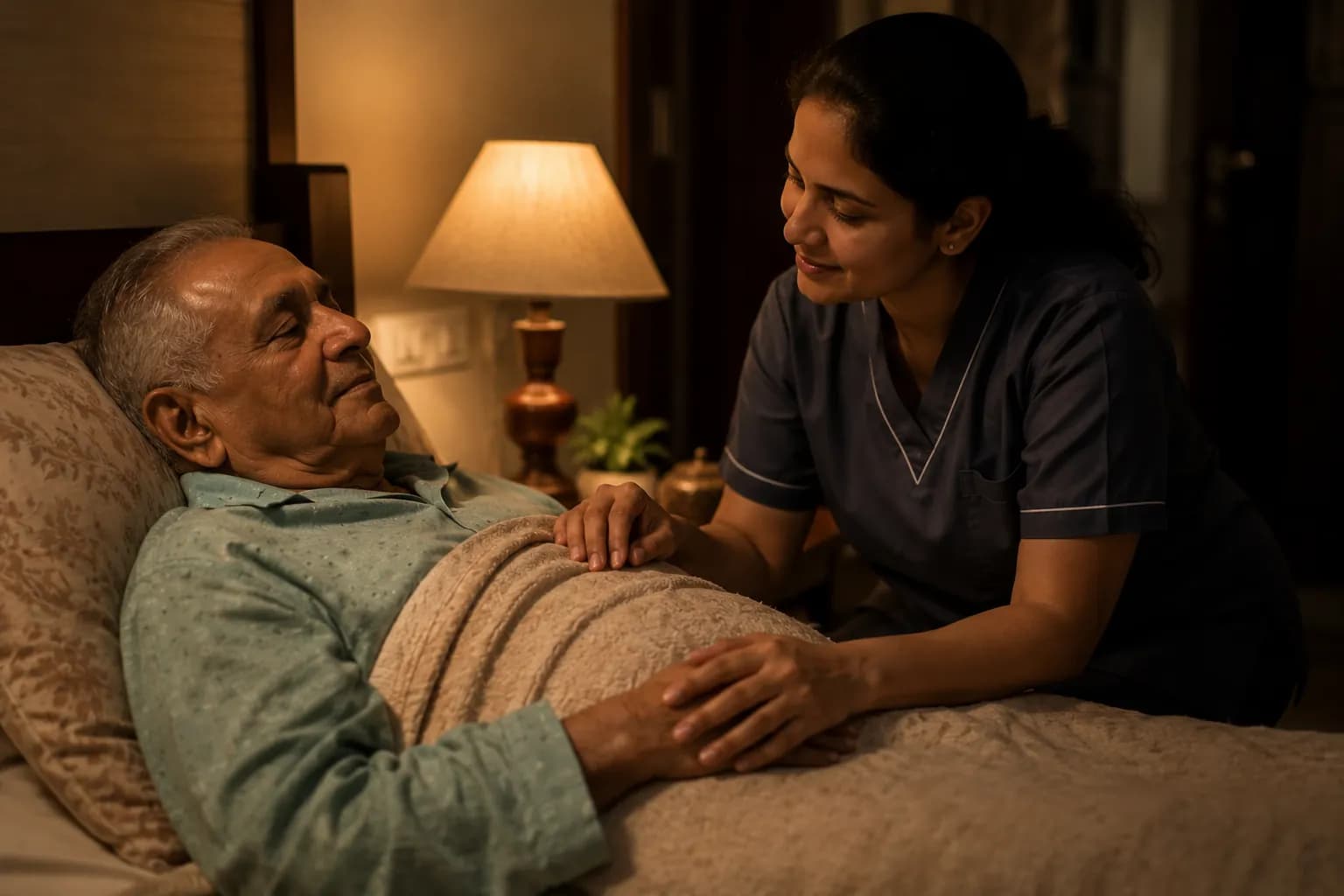
Reaching the advanced stages of Parkinson's is one of the hardest chapters I ever walk a family through. Your loved one may need help with almost everything, communication can become difficult, and the worries seem to multiply overnight. It's a tender, heavy time. And yet, in my experience, knowing what to expect and how to plan brings a real measure of calm right when you need it most — because so much of the fear comes from not knowing what's coming.
So let me talk you through what late-stage Parkinson's typically involves, how care needs shift, how to head off the most common complications, and how specialist and palliative care can keep your loved one comfortable and dignified. As always, these are general guides; your loved one's neurologist and care team should direct every specific medical decision.
Sources: Hoehn & Yahr scale; Parkinson's Foundation.
What "late-stage" Parkinson's really means
In the advanced stages, movement becomes severely limited. Many people can no longer stand or walk without significant help and may rely on a wheelchair or spend much of the day in bed. Stiffness (rigidity) and slowness (bradykinesia) are pronounced, and medication tends to bring less predictable relief than it once did.
Just as importantly — and this is the part families often aren't warned about — the non-motor symptoms frequently come to the fore and can affect quality of life as much as the physical ones.
Advanced motor symptoms
- Severe rigidity and very slow movement.
- Difficulty changing position, sitting up, or transferring from bed to chair.
- Reduced facial expression and a soft, hard-to-hear voice.
- Difficulty with fine tasks and, eventually, most self-care.
Advanced non-motor symptoms
- Swallowing difficulties, raising the risk of choking and chest infections.
- Communication challenges, as speech becomes quiet and less clear.
- Cognitive changes, including memory or thinking difficulties, and sometimes confusion or hallucinations.
- Sleep disturbance, mood changes, and blood pressure drops on sitting or standing.
Here's what I tell families: late-stage Parkinson's affects far more than movement. Good care in this phase is holistic — attending to comfort, nutrition, skin, breathing, communication, and emotional wellbeing all together, not one at a time.
Why 24/7 care becomes necessary
At this stage, help is needed around the clock. Someone with advanced Parkinson's usually can't be left alone safely — transfers, feeding, personal care, and repositioning all need skilled, patient hands, often several times through the day and night.
I'll be honest with you about this level of care: it's intensely demanding. Providing safe, gentle, round-the-clock support at home — while also managing precise medication schedules and watching for complications — can stretch even the most devoted family to breaking point. That isn't a failure of love. It's simply the reality of advanced illness, and I never want a family to read it as anything less.
This is often the point where families ask me about a specialist care home with 24/7 nurse-led support. Trained teams can provide consistent skilled care, manage complex needs safely, and free family members to go back to being sons, daughters, and companions rather than exhausted full-time caregivers. If it helps to understand how needs escalated to here, our guide to the stages of Parkinson's disease traces that whole journey.
Preventing the most common complications
I'd say a large part of late-stage Parkinson's care is really about preventing complications before they ever start. Three deserve particular attention.
1. Aspiration and chest infections
When swallowing weakens, food, liquid, or even saliva can slip into the airway and lungs, causing aspiration pneumonia — one of the most serious risks in advanced Parkinson's. Careful attention helps:
- Eating and drinking slowly, sitting fully upright.
- Adjusting food textures and thickening liquids if advised by a speech-language therapist.
- Good oral hygiene to reduce harmful bacteria.
- Watching for coughing during meals, a wet voice, or recurrent chest infections — and reporting them to the doctor promptly.
2. Pressure sores
Reduced movement means staying in one position too long, which can damage the skin and cause pressure sores (bedsores). Prevention includes:
- Regular repositioning, typically every couple of hours.
- Pressure-relieving mattresses and cushions.
- Keeping skin clean and dry, and checking daily for redness.
- Good nutrition and hydration, which help skin stay healthy.
3. Falls and injuries
Even someone who is mostly immobile can fall during transfers or an attempt to move. Safe transfer techniques, the right equipment, a fall-safe environment, and close supervision all bring the risk down. These are core parts of skilled care, and genuinely hard to sustain alone at home.
Nutrition, hydration, and comfort
Keeping up nutrition and hydration becomes both more important and more difficult in advanced Parkinson's, largely because of swallowing problems and slower eating.
What helps: soft or texture-modified meals when needed, small and frequent portions, unhurried mealtimes, and plenty of gentle encouragement. A speech-language therapist and dietitian can advise on safe textures and adequate nutrition for the individual. Where eating becomes very difficult, the care team and neurologist will discuss the options sensitively with the family, always centring the person's comfort and wishes.
Physiotherapy still has a role even now — gentle movement, passive stretching, and thoughtful positioning help prevent stiffness, contractures, and discomfort, and they make caregiving easier too.
The overlap with palliative care
As Parkinson's advances, care naturally shifts toward comfort, dignity, and quality of life — and this is where palliative care comes in. I find palliative care is widely misunderstood in India as being only for the final days, but it's far broader than that: it's specialist support focused on relieving symptoms, easing distress, and holding up the whole family, and it can run right alongside ongoing treatment.
In late-stage Parkinson's, a palliative approach can help with:
- Managing pain, discomfort, and distressing symptoms.
- Reducing the burden of stiffness, constipation, and breathing difficulties.
- Emotional and psychological support for the person and family.
- Thoughtful conversations about wishes and priorities for care.
Understanding the difference between palliative and hospice care helps families choose well — our guide on palliative vs hospice care in India explains it clearly. At Prarambh, our palliative and end-of-life care is delivered with deep compassion, always guided by the treating doctors and the family's wishes.
When a specialist care home helps
As you plan ahead, I find it steadies families to focus on a few clear priorities, in order:
General guidance; individualise with your care team.
Choosing residential care in advanced Parkinson's is a decision families almost always reach with a tangle of relief and guilt. Here's what I gently remind them: the goal is exactly the same as it has always been — the best possible comfort, safety, and dignity for the person you love.
A specialist care home can offer meaningful advantages at this stage:
- 24/7 doctor and nurse-led support, so skilled help is always at hand.
- Trained teams experienced in safe transfers, feeding, and personal care.
- Complication prevention built into daily routines — repositioning, skin checks, oral care, safe swallowing practices.
- A fall-safe, purpose-designed environment.
- Physiotherapy to maintain comfort and reduce stiffness.
- Emotional support for the whole family, including NRI families caring from afar.
Families supporting a loved one from another city or country often tell me their greatest relief is simply knowing that reliable, skilled care is being provided consistently on the ground. Our Noida care home and our specialist Parkinson's disease care programme are built around exactly these needs.
Frequently asked questions
What are the signs that Parkinson's has reached a late stage?
Late-stage Parkinson's usually involves severe difficulty standing or walking, dependence on others for most daily activities, prominent swallowing and communication problems, and often cognitive changes. Only the treating neurologist can accurately assess the stage, so any concerns should go to them.
Does late-stage Parkinson's mean the end is near?
Not necessarily. The advanced stage describes a high level of physical dependence and complex needs, but people can live in this stage for a meaningful period with good care. Prognosis is deeply individual, and questions about it should always be discussed with the treating doctor who knows the full history.
How can we prevent chest infections and pressure sores?
Chest infections are reduced by safe swallowing practices, upright positioning during meals, good oral hygiene, and prompt medical attention for coughing or a wet voice. Pressure sores are prevented by regular repositioning, pressure-relieving surfaces, skin checks, and good nutrition. Skilled care teams build these routines into daily life.
Is palliative care the same as giving up?
No. Palliative care focuses on comfort, dignity, and quality of life, and can run alongside ongoing treatment. It's about caring well, not doing less — and it supports the family emotionally too. A palliative approach can begin well before the final phase of illness.
Should we care for our parent at home or move to a care home?
There's no single right answer — it depends on your loved one's needs, safety, your family's capacity, and available support. Home care can work with enough help; a specialist care home offers 24/7 skilled support and complication prevention that's hard to replicate at home. Discuss the safest option with your treating doctor and care team.
Compassionate care, when it matters most
Late-stage Parkinson's asks a great deal of families, and no one should have to carry it alone. At Prarambh Care Homes in Noida and Ahmedabad, our 24/7 doctor and nurse-led teams provide skilled, gentle, physiotherapy-supported care — with a strong focus on comfort, dignity, and preventing complications — while giving your family the support and reassurance you deserve.
If you're facing these decisions, we're here to listen without pressure. Book a visit or call +91 95120 21118, and let us help you find the most caring way forward.
Medical Reviewer — Emergency & General Medicine, MBBS
MBBS physician with over two decades in emergency, critical and general medicine. Read full profile →
Bring the right care to your family
Get a compassionate, doctor-led care plan from our Noida & Ahmedabad team.