
How to Choose a Senior Care Home in India: A 20-Question Checklist for Families

July 15, 2026 · 9 min read
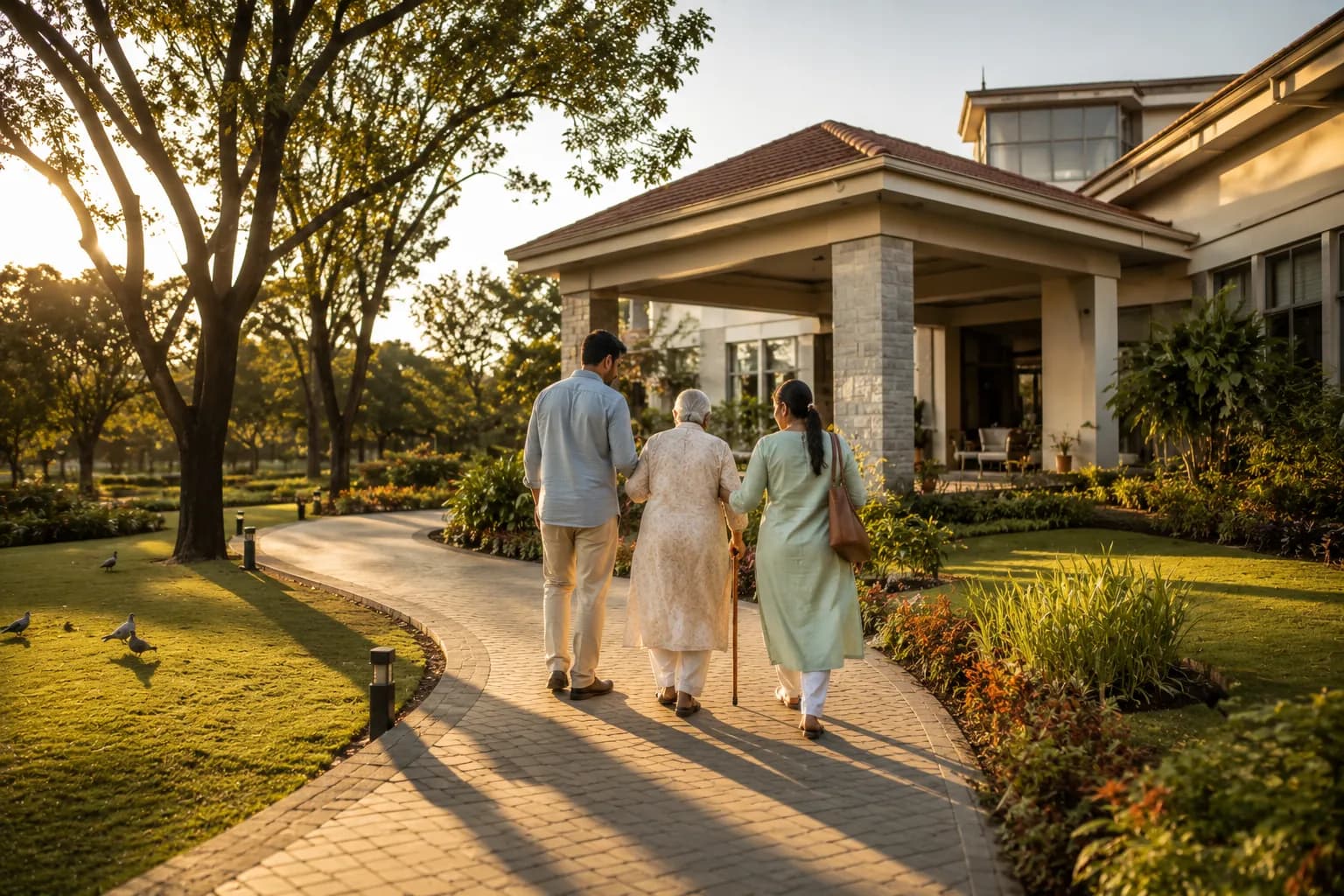
Choosing a care home for your mother or father might be one of the most emotionally loaded decisions you'll ever make — I've sat with enough families to never take that lightly. And here's the hard part: the glossy brochure and the warm first phone call tell you almost nothing about what actually happens inside those walls on an ordinary Tuesday afternoon. The good news is that you can judge quality yourself, if you know what to ask and what to watch. With around 150 million Indians now aged 60 and older (Govt of India / UNFPA projections), more families than ever are facing this choice — so let me give you a way to judge homes methodically, not on first impressions.
What follows is the checklist I'd genuinely hand my own sibling: 20 questions, grouped by theme, to carry into every visit. Ask them out loud, watch how the staff respond, and trust what you see as much as what you're told.
Sources: Govt. of India / UNFPA population projections; Prarambh care guidance.
Before you start: know what you're actually looking for
Before you compare a single home, get clear on the level of care your parent needs — assisted living, memory care and nursing care are genuinely different things, and mixing them up is how families overpay or, worse, under-provide. Our guide to the difference between assisted living and nursing homes will help you decide, so you're comparing like with like. Then set a rough budget using our cost of senior care in India guide.
Here's what I want you to remember: you are not just buying a room. You're choosing the people, the systems and the daily culture that will care for someone you love. Judge all three — not the lobby.
Safety and security (questions 1–3)
A safe environment is non-negotiable — especially for a frail or memory-impaired parent. I don't compromise here, and neither should you.
- Is the building senior-safe? Look for grab bars, anti-skid flooring, ramps, wide doorways, good lighting and handrails along corridors.
- How is the premises secured? Ask about entry/exit control, CCTV in common areas, and — crucially for dementia residents — a wander-safe layout that stops residents leaving unsupervised.
- Are there call bells and monitoring? Every bed and bathroom should have an easy way to summon help, with a system that ensures someone actually responds quickly.
Medical care and staffing ratio (questions 4–7)
This is where good care is won or lost. In my experience, staffing is the single biggest driver of everything else — so press hardest here.
- What is the staff-to-resident ratio, day and night? Care can thin out dangerously overnight, so ask specifically about the night shift.
- Are doctors and nurses available, and how often? Clarify whether there's a 24/7 nurse presence, how frequently a doctor reviews residents, and how fast specialists can be arranged.
- How are medications managed? There should be a clear system for storing, recording and administering medicines correctly, run by trained staff.
- How are staff trained and vetted? Ask about qualifications, background checks, ongoing training, and — for memory care — specific dementia training. Our dementia and Alzheimer's care is built around specially trained teams.
Hygiene and infection control (questions 8–10)
Your eyes and nose are the best inspectors you've got here. Notice these on your visit — don't just take an answer for it.
- Is the home genuinely clean — including bathrooms and resident rooms, not just the reception? A persistent smell of urine is a serious warning sign, and I mean that.
- How is personal hygiene handled? Ask how often residents are bathed, how incontinence is managed with dignity, and how bed-bound residents are kept clean and turned to prevent bedsores.
- What are the infection-control practices? Look for hand-sanitising, clean linen changes, safe waste disposal and a clear protocol for isolating anyone who's unwell.
Meals and nutrition (questions 11–13)
Food is health, comfort and one of the day's great pleasures — I've seen it lift a resident's whole week. It deserves close attention.
- Can you see the menu and, ideally, the kitchen? A varied weekly menu and a clean kitchen tell you a lot.
- Are diets tailored to health conditions? Diabetic, low-salt, soft and pureed diets should be routine, not an afterthought.
- Is mealtime dignified and social? Watch a meal if you can. Are residents helped kindly? Is the food warm, fresh and actually eaten?
Activities, dignity and emotional wellbeing (questions 14–16)
A good home nourishes the spirit, not just the body. I take loneliness and boredom seriously — they're genuine health risks for seniors, not soft extras.
- What does a typical day look like? Ask for the activity calendar — exercise, festivals, music, games, outings — and check it actually happens.
- How is dignity and autonomy respected? Can residents keep their routines, belongings and choices? Are they spoken to warmly and by name?
- How does the home keep families connected? Ask about visiting hours, updates, and — vital for NRI families — video calls and regular reports so you can stay involved from afar.
Transparency, cost and contracts (questions 17–18)
Honest homes are open about money and rules. If someone gets evasive when you ask about cost, that tells you something.
- Is the pricing fully transparent? Get a written breakdown of the monthly fee, deposits, and every likely extra — consumables, physiotherapy, specialist visits. Our cost guide shows what to expect.
- What do the contract and policies say? Read the fine print on notice periods, refunds, what happens if needs increase, and end-of-contract terms before you sign.
Emergency protocols (questions 19–20)
When a crisis hits at 2 a.m., it's the systems — not the smiles — that save lives.
- What happens in a medical emergency? Ask about the exact protocol: trained first response, the nearest tie-up hospital, ambulance arrangements and how fast a resident can reach an ICU.
- How and when are families informed? There should be a clear communication chain so you're told immediately about any emergency, fall or hospitalisation.
The red flags I'd walk away from
If you notice any of these, slow down and look harder. I've learned to trust these signals:
- A lingering smell of urine or visibly poor cleanliness
- Reluctance to let you see resident rooms, the kitchen or visit unannounced
- Residents who look sedated, neglected, bored or fearful
- Vague or evasive answers about staffing ratios and costs
- No clear medical or emergency protocol
- Pressure to pay a large sum or sign immediately
- Staff who speak about residents dismissively or without warmth
How I'd actually run the visits
Visit more than once, including unannounced. A booked tour shows you the home at its best; a surprise afternoon visit shows you the truth. Watch how staff and residents interact — that reveals the real culture faster than any answer.
Use your senses. Is it calm or chaotic? Do residents look content? Would you feel comfortable spending a day here?
Involve your parent where you can. A move made with someone lands far better than one made to them. Let them see the place, meet the staff and share a meal if possible. If your parent has dementia and this transition is hard, our guide on when to move a parent to a dementia care home offers gentle, practical help.
Talk to current families. If you can, speak to relatives of existing residents. Their honest experience is worth more than any brochure I could ever write.
Frequently asked questions
What is the most important thing when choosing a senior care home?
Staffing quality and ratios — because kind, well-trained, adequately staffed teams drive everything else: safety, hygiene, medical response and dignity. A beautiful building with too few or poorly trained staff cannot deliver good care. Always ask about day and night staff-to-resident ratios.
How many times should I visit before deciding?
At least two or three times, including one unannounced visit at a normal, busy hour like mealtime. That shows you the home as it really operates, not just on a polished, pre-arranged tour. Bring this checklist each time.
What are the biggest red flags in a care home?
A smell of urine or poor cleanliness, reluctance to show resident areas, residents who look neglected or overly sedated, vague answers about staffing and cost, no clear emergency protocol, and pressure to pay or sign quickly. Any of these warrants a much closer look.
Should I involve my parent in choosing the care home?
Wherever possible, yes. A decision made with your parent — letting them visit, meet staff and voice preferences — leads to a far smoother, happier transition than one imposed on them. Even with dementia, familiarising them gently with the place helps.
How do I choose a care home as an NRI managing from abroad?
Prioritise homes with strong transparency and family-communication systems — regular updates, video calls and clear reports. Ask a trusted relative or friend to visit in person using this checklist, and choose a home that welcomes remote involvement. Many of our families manage care beautifully from overseas.
Come and inspect us closely — please
The best care home has nothing to hide and everything to show you, and I'd say the same of us. At Prarambh Care Homes in Noida and Ahmedabad, we welcome your questions, your unannounced visits and this entire checklist. With 24/7 doctor and nurse-led teams, transparent care plans and the trust of 350+ families, I want you to choose us with your eyes wide open. Explore our care homes to learn more.
Book a visit to see everything for yourself, or call me at +91 95120 21118 for a warm, honest conversation about your parent's needs.
Medical Reviewer — Emergency & General Medicine, MBBS
MBBS physician with over two decades in emergency, critical and general medicine. Read full profile →
Bring the right care to your family
Get a compassionate, doctor-led care plan from our Noida & Ahmedabad team.